
Tamil Nadu, in southern India, has never felt like a destination to me. I was born here, though I grew up in Hyderabad, and for decades I have returned to its highways, riverbanks, sacred landscapes and temple towns — first to spend the summer vacations at my grandparents’ home, and later for personal reasons and with an itinerary, but more often guided simply by curiosity.
That distance perhaps shaped my relationship with this land; each return has revealed a carving I had once missed, an ancient ritual newly understood, a landscape seen differently with time.
After decades of returning, what continues to intrigue me is not only the antiquity of these spaces, but their continuity.
Drive past the Kaveri delta with paddy fields stretching endlessly, coconut palms tilting towards altered riverbeds, temple towers rising unexpectedly above tiled roofs, and it becomes evident that this is a land where Hindu devotion, poetry and power have long coexisted.
This page gathers some of those journeys across temple towns, micro-carved pillars, revered groves, palace corridors and festival mornings, in an attempt to understand how sacred architecture and living tradition remain inseparable in Tamil Nadu.
The Sangam Age
The Sangam age, which flourished between 300 BCE and 300 CE, laid an early literary foundation for Tamilakam.
Nearly 2,400 poems were composed by 473 poets — men and women from different walks of life, many of whom remain unnamed. Together, these works came to be known as Sangam literature. They spoke of love and loss, war and honour, landscapes and longing, capturing both the everyday and the epic in equal measure.
What was once sung in assemblies did not disappear with time; it evolved.
In the centuries that followed, from the Pandyas to the later Cholas, successive dynasties continued to nurture art and patronage literary traditions across this region, in different ways.
From Sangam Poetry to Stone
Although, the Sangam age gave Tamilakam its literary foundation, its influence did not remain confined to verse. Over time, what had once been preserved in verse began to take shape in granite and bronze.
This showed that the impulse to build, to sanctify and to leave something enduring behind remained constant.
The Pandyas nurtured early temple and devotional traditions like the rock-cut temple at Pillayarpatti. The Pallavas transitioned from these rock-cut spaces to structural stone temples, refining proportion and experimenting with form. The Cholas, inheriting this foundation, expanded on both scale and intricacy, elevating temple architecture to imperial heights but with precision, devotion and authority.
Across Tamil Nadu, this evolution is etched into stone. Inscriptions record land grants and genealogies. Sculptures narrate sacred episodes from Indic and Tamil epics and literature. Mandapams functioned not only as ritual spaces but also as civic ones. Architecture here was never detached from society but was intricately woven into its everyday routine.
Dynasties rose and receded — Pandyas, Pallavas, Cholas. But the temples and structures they built stand today as sacred living spaces , where rituals and Tamil traditions continue without interruption, and not relegated to mere relics of a distant past.
Monumentality and Imperial Vision
If scale could communicate power, the Cholas understood it deeply.
The Brihadeeswarar temple at Thanjavur, commissioned by Rajaraja Chola I, remains one of the most striking examples of architectural ambition. Its towering vimana still dominates the skyline, its engineering precision continuing to intrigue historians and architects alike. Even centuries later, the mechanics of raising its massive capstone inspire debate.
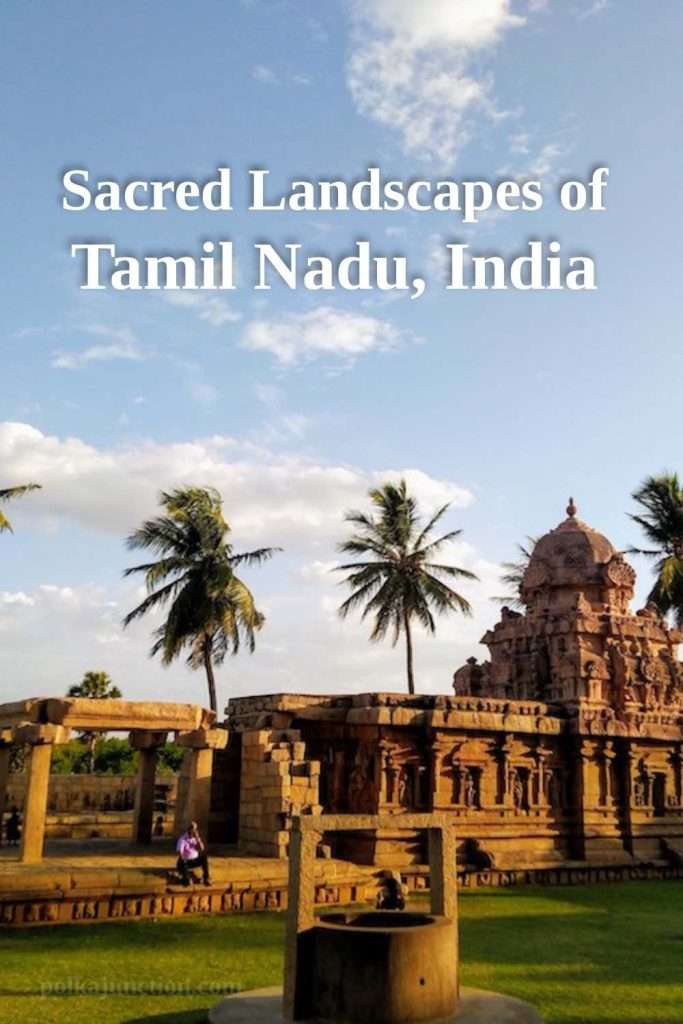
Further east lies Gangaikondacholapuram — the imperial capital established by Rajendra Chola I after his northern campaigns. What survives today is the Brihadeeswarar temple, echoing Thanjavur in intent yet subtle and feminine in contour. There is an elegance here — a slight curvature, and a sculptural refinement that sets it apart. The surrounding capital may have faded, but the temple endures as a living sacred space of a once-thriving political centre.
These were not isolated shrines. They were capitals where sovereignty and sanctity intertwined.
Poetry in Granite — Darasuram
If Thanjavur overwhelms one with its monumentality, Darasuram draws one closer.
The Airavateswarar temple at Darasuram, built by Rajaraja II in the 12th century, is known for its micro-carvings — some no more than an inch or two in height, yet astonishing in articulation. For a first-time visitor, the experience can feel almost overwhelming. Every surface appears animated.
The Rajagambhira mandapam, designed in the form of a chariot, is framed by ornate pillars and curled balustrades adorned with elephants and makaras. At the base of its columns, mythical Yalis — part elephant, part lion, part imagination — reveal subtle differences upon closer observation. The detailing rewards patience and time.
Granite panels narrate episodes from the Skanda Purana and the Periyapuranam. The 63 Nayanmars find a sculpted presence in niches that still invite reverence. A diminutive dancer frozen mid-thandavam, musicians absorbed in performance, a hunter-poet standing humbly — these are not grand sculptures meant to dominate, but intimate carvings that demand attention to detail.
Darasuram does not rely on height for impact. It reveals its splendour gradually.

Temple Towns and Sacred Geography
The Kaveri and Kollidam rivers shaped more than agriculture. They shaped sacred networks.
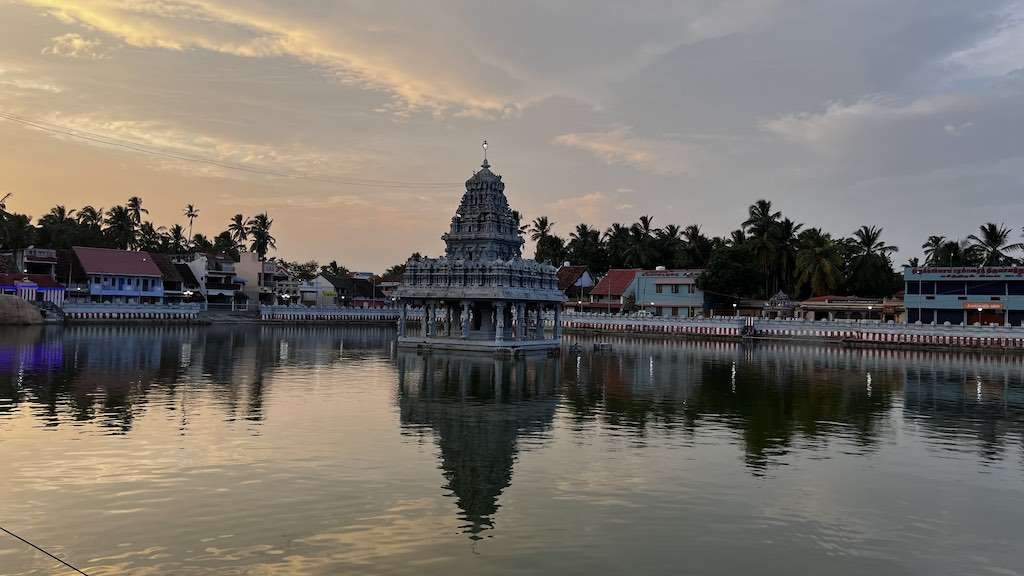
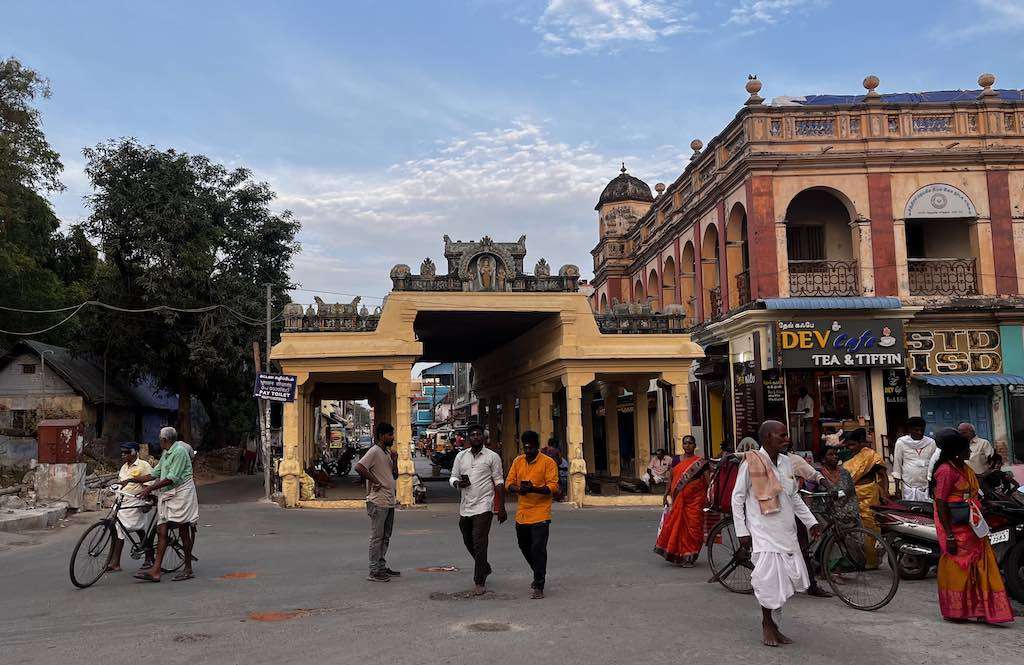
Temple towns such as Thanjavur, Srirangam and Kumbakonam grew organically around sanctuaries that anchored civic and ritual life. Processional streets radiated outward around the main temple like in the Mylapore neighbourhood of Chennai, while temple tanks reflected both sky and vimana while nurturing lives.
Markets and residential quarters aligned themselves in relation to the deity at the centre.
Across Tamil Nadu, geography, commerce and devotion remain intertwined till today. Even where political capitals shifted, ritual continuity did not. The sacred calendar continued its cycles, and communities remained bound to home-grown traditions like the Navrathri bommai golu festival, and routines of temples.
To travel through these towns is to sense how landscape and architecture co-evolved over centuries, sometimes across a millennium.
Living Traditions
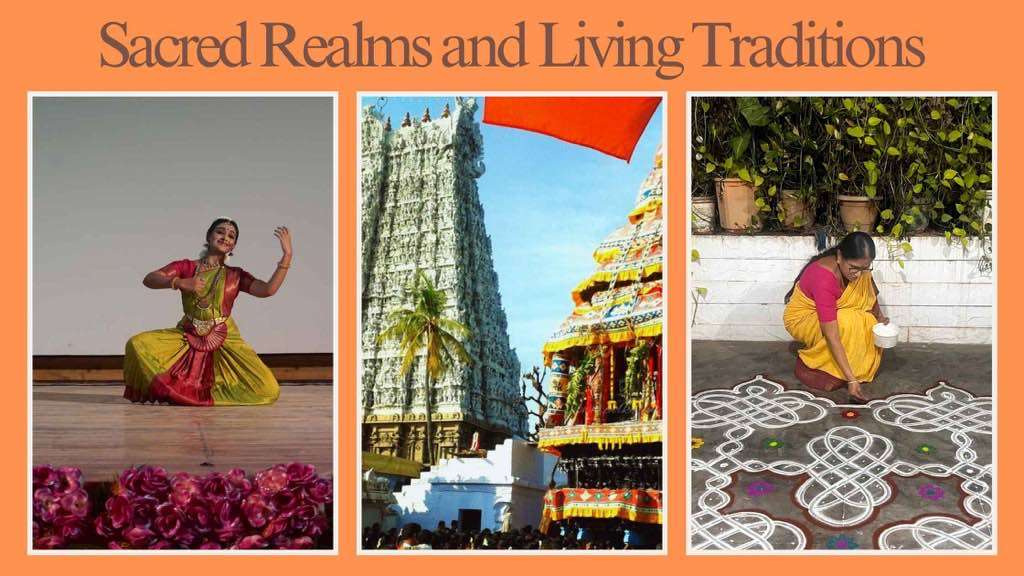
During Maargazhi season, devotional hymns still echo through temple corridors and streets at dawn. Ancient ritual calendars and almanacs unfold month after month. Families gather for ceremonies that mirror practices centuries old. Priests chant, lamps flicker, and processions wind through familiar streets.
Architecture here is not preserved behind glass. It is inhabited and woven into daily life, while absorbing seasons, stories and generations.
Tamil Nadu’s sacred landscapes therefore cannot be reduced to monuments alone. They are lived spaces — where poetry found granite, where dynasties inscribed ambition into sanctity, and where devotion continues without interruption.
Journeying through towns and villages of Tamil Nadu is not to complete a checklist, but to be a part of an ongoing conversation between time, faith and place, if even if it is for a shorter time.
Sacred and Everyday Landscapes of Tamil Nadu
These journeys look at Tamil Nadu from different vantage points — imperial ambition, seasonal ritual and daily practice, yet each one returns to the temple.
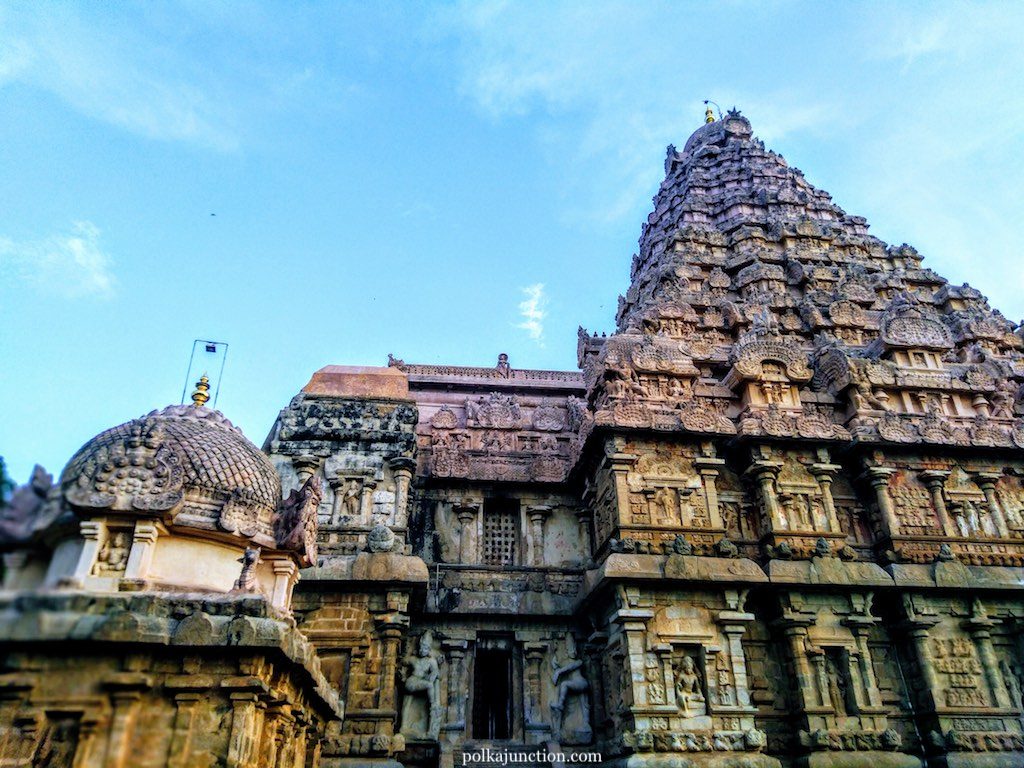
An exploration of Rajendra Chola’s lost capital and the quiet elegance of its
Brihadeeswarar temple in Ariyalur.
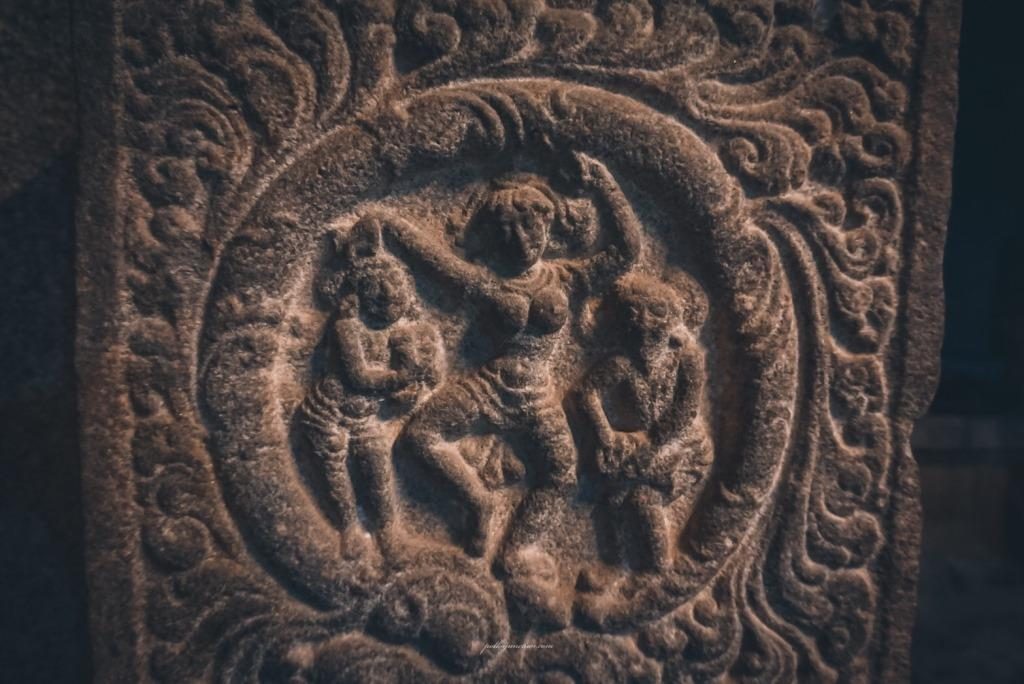
Darasuram
A closer look at the Airavateswarar temple, where Chola craftsmanship reveals itself through intricate, almost meditative carvings.

Pillayarpatti
An ancient rock-cut shrine where devotion continues without spectacle, and is sustained
by the local community.

Maargazhi in Tamil Nadu
Bhajans at dawn, kolam, carnatic music and temple corridors come alive each winter, marking the sacred month.

Bommai Golu
Navaratri steps filled with dolls and stories, where homes follow tradition, and community celebration.
Pin this page for reference
This page will continue to grow as I revisit and expand these journeys…