
Looking for a place to stay near Sariska Tiger Reserve? Wondering what to see and do in and around the region? You might find this account useful.
Over the years, I have visited Sariska several times, and each trip has offered a different glimpse of this quiet, historical landscape.
The reserve lies between Delhi and Jaipur, making it an easy road trip from either city. It is one of those destinations you can reach comfortably by car, with the journey itself becoming part of the experience.
Through this post, I hope to introduce this beautiful and layered region through my words and photographs.
The Sariska region
First things first. Let me introduce you to the Sariska Tiger Reserve, its brief history, and the places to see in and around the region.
For the uninitiated, Sariska Tiger Reserve lies in the Alwar district of Rajasthan, a landscape whose history stretches back to the times of the Mahabharata and perhaps even earlier. It is often considered one of the oldest inhabited regions of the Indian subcontinent.
In ancient texts, this area, nestled in the folds of the Aravalli hills, was known as Matsya Pradesh. Its capital was Viratanagari, present-day Viratnagar or Bairat, which was once ruled by the Suryavanshi dynasty.
Incidentally, Lord Rama is also believed to have belonged to the Suryavanshi lineage.
Today, the Sariska region is known for its royal past, tales of Rajput valour, hearty local cuisine, and, of course, its wildlife—especially the striped felines, the tigers.

Sariska Tiger Reserve
If you are sceptical about spotting tigers in Rajasthan, a state that is often associated with the Thar desert, there is no need to worry.
While the desert occupies large stretches of the south-western and western parts of the state, the rest of Rajasthan is far more varied in landscape. It is home to three tiger reserves—Ranthambore, Sariska, and Mukundra Hills—with a fourth currently being developed around the Ramgarh Vishdhari Sanctuary.
Today, Sariska is said to have around 23 tigers, while the three reserves together account for more than a hundred. Ranthambore, unsurprisingly, leads the numbers. This information was shared with me by a local naturalist who has spent over a decade working in the region.
The Sariska Tiger Reserve is also among the older tiger reserves in India, with a diverse range of wildlife—from leopards and striped hyenas to nearly 200 species of birds, along with varied flora and, of course, its population of tigers.
Declared a wildlife sanctuary in 1955, Sariska was later designated a national park in 1979. However, it remained without tigers for nearly three and a half years following the Sariska shock episode.

The Sariska shock and its link with tigers
According to local accounts, by 2004 Sariska had become India’s first tiger reserve to lose its entire tiger population to poaching and human–wildlife conflict—an episode later referred to as the Sariska Shock.
During this time, a series of poaching incidents were linked to the notorious wildlife trader Sansar Chand.
In the early 2000s, these activities severely depleted the tiger population, leaving the reserve without any big cats. It was only after Sansar Chand’s arrest in 2005 that the scale of the problem came into wider public focus, and authorities acknowledged the lapses in protection.
In short, the chain of events that led to Sariska losing all its tigers came to be known as the Sariska Shock.
I had also written about Sariska’s wildlife, temples, and haunted ruins in an earlier feature for The National News.
India’s first tiger re-introduction
After this shocking episode, Sariska became the first tiger reserve in the world to attempt a full-scale tiger reintroduction.
On June 28, 2008, the first male tiger was airlifted from Ranthambore in an Indian Air Force MI-17 helicopter and released into the forests of Sariska at Nayapani. He was designated ST-1, and was soon joined by ST-2 in July 2008.
Today, Sariska has gradually rebuilt its tiger population—now estimated at around 23 individuals—thanks to conservation initiatives such as Project Tiger, which facilitated the translocation of big cats from Ranthambore after the relocation of villages from the core area.
Now that we have traced Sariska’s turbulent past and its recovery, it’s time to head into the forest for a safari.

A trip to the Sariska Tiger Reserve
On the morning of the safari, we climbed into a jeep along with the owners of Sariska Manor, who kindly doubled up as our guides inside the reserve.
As we drove along the marked trails, Mahes and Sunita Panwar—both avid wildlife enthusiasts, shared anecdotes about their past sightings, encounters with ‘Yuvraj’ or the ‘Prince’ (a well-known Sariska tiger), and local folklore, all the while keeping an eye out for fresh pugmarks.
While I soaked in their stories and the scent of the jungle, my eyes kept darting in every direction, hoping to catch a glimpse of the striped monarch.
But the forest had other plans. We were neither stunned into silence nor left pinching ourselves in disbelief, for, we spotted no striped or spotted felines that morning.

What to see in the Sariska Tiger Reserve
You might be wondering—if not a tiger, what else is there to see inside the Sariska Tiger Reserve?
Well, dry safaris are always a possibility. Not just in Sariska, but in any wildlife sanctuary. These are not zoos where animals appear on cue. They are living, breathing habitats, and we are, in many ways, the intruders.
So perhaps the best way to approach a safari is to surrender to the moods and rhythms of the forest.
That said, the morning wasn’t entirely without its rewards. We watched chital or spotted deer grazing in clearings, langurs at play in the trees, wild boars darting into the undergrowth, and birds gathered around waterholes as if in animated conversation.
And then there were the landscapes—rugged cliffs, quiet streams, and the kind of weather that makes the forest feel even more alive.
Also, it is worth remembering that Sariska is not just about wildlife. The region is dotted with historical ruins, revered temples, and old forts.
This is a landscape layered with history, with roots that are often traced back to the Mahabharata period. So, if you find the time, do step out of the safari circuit and explore some of the places of interest around Sariska.

Pandupol: The legendary gateway of the Pandavas inside Sariska
The Pandavas are believed to have found sanctuary in the forests of Sariska during the final year of their exile.
Associated with this legend is Pandupol, a temple dedicated to Hanuman, built at the spot where Bhima—the strongest of the Pandava brothers—is said to have been humbled by Hanuman himself.
The name Pandupol translates to “gateway of the Pandavas” in Sanskrit, and the temple is thronged by villagers from nearby areas on auspicious days.
To the west of the reserve lies the Mangalsar Dam, a quiet haven for birdwatchers.

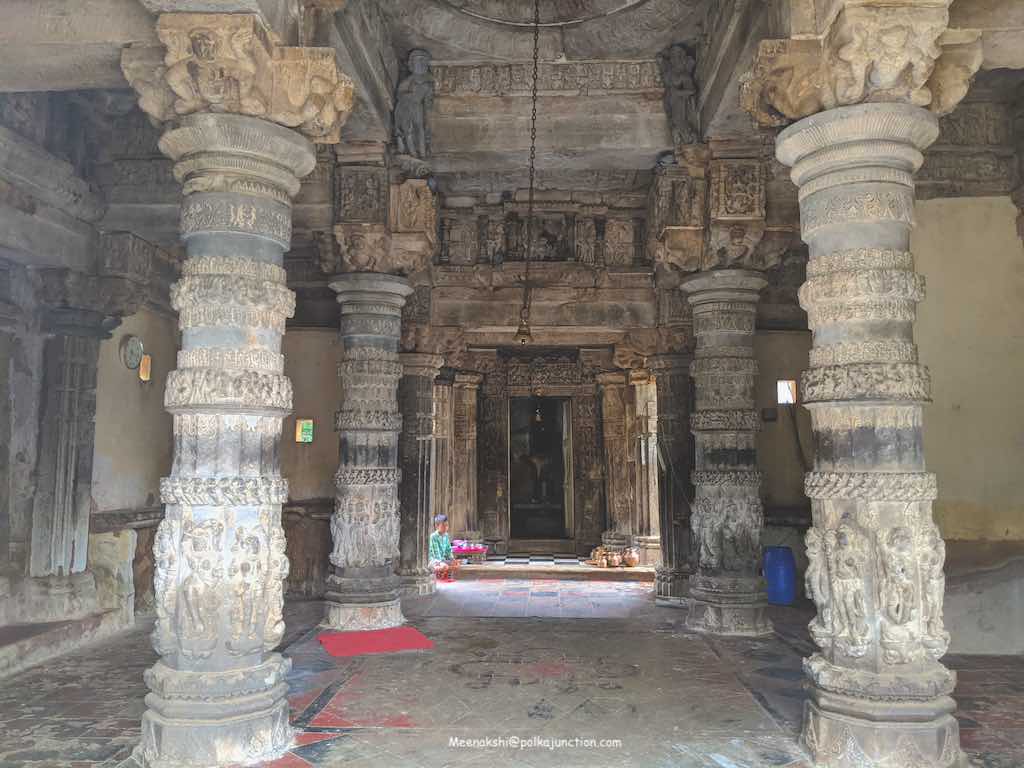
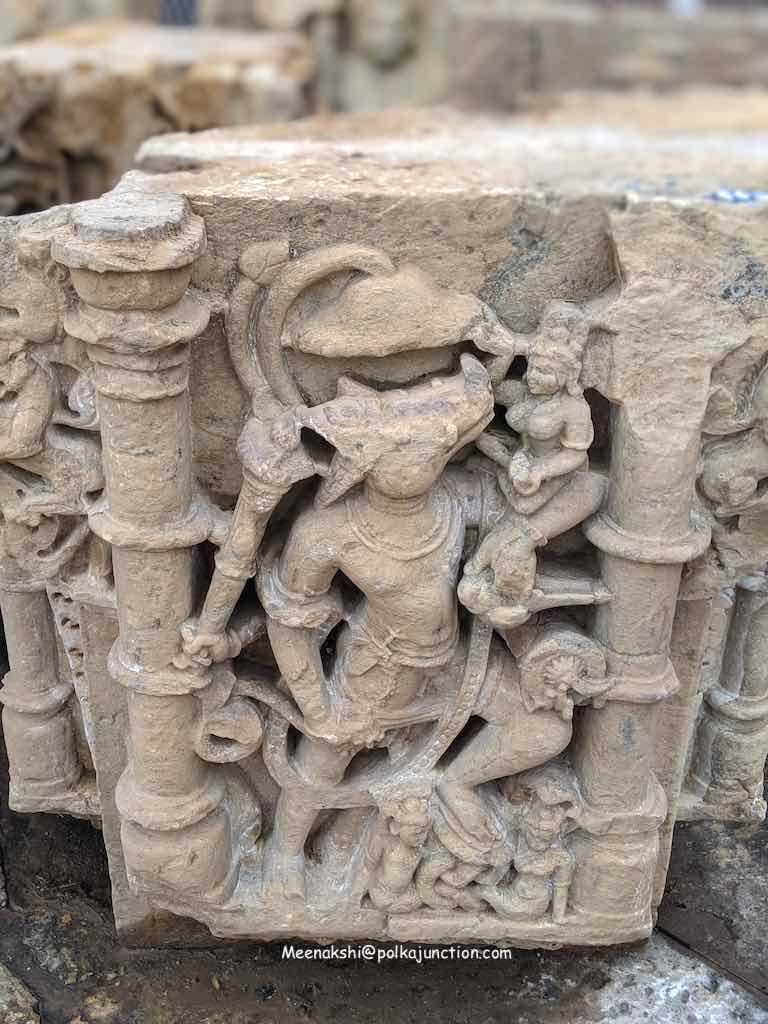
Neelkanth Mahadev : Temple ruins in the hills of Sariska
A little further uphill stands the 7th-century Neelkanth Mahadev temple, dedicated to Lord Shiva.
Scattered around this site are the ruins of more than 200 Hindu and Jain temples, with intricate sculptures and architectural fragments that hint at a once-flourishing settlement, but vandalised by Aurangzeb — who is unfortunately being eulogised by radicals as part of a larger campaign.
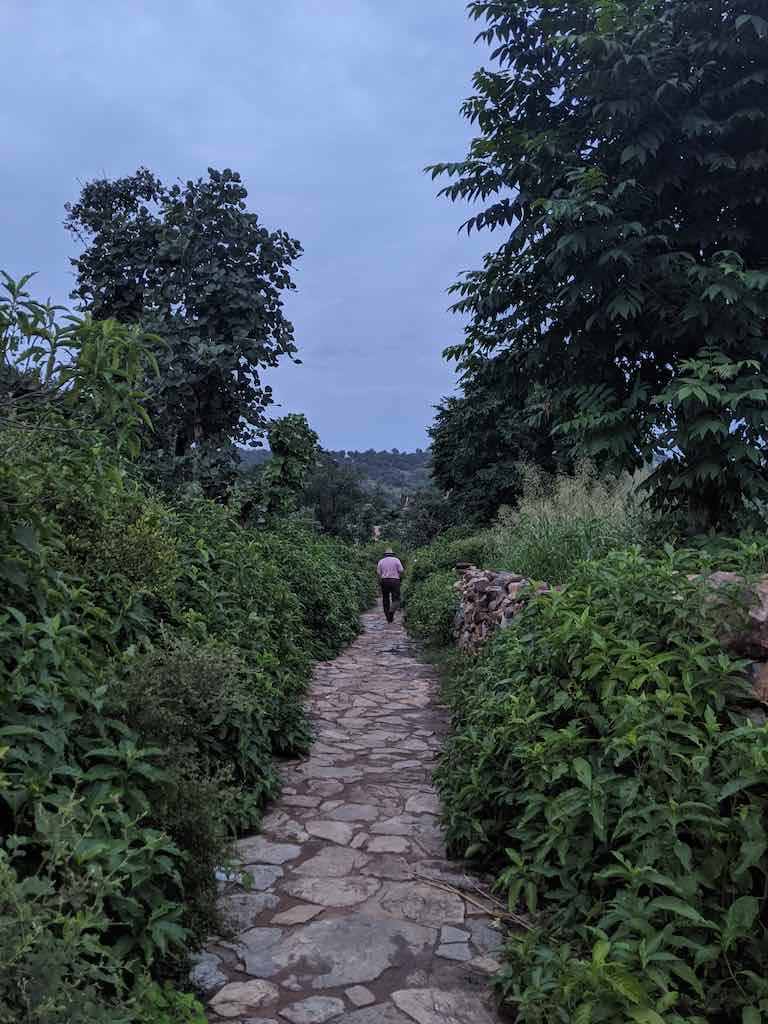
The hamlet around is picturesque and serene. A walk around is highly recommended.


Naugaja Temple
A short, slightly adventurous walk from Neelkanth, with fields on either side, leads to the remains of the 9th-century Naugaja Digambar Jain temple.
Here, a solitary statue of the Jain Tirthankara Shantinatha stands on a raised platform, carved in pale red sandstone. The figure is surrounded by the ruins of the old temple complex, with the Aravalli hills and Sariska’s forests forming a dramatic backdrop.

Bhangarh Fort : Possibly India’s most-haunted fort
A trip to Sariska often includes a visit to the medieval Bhangarh Fort, located about 21 kilometres south of the reserve.
Built during the reign of Maharaja Man Singh I, the fort sits dramatically against the hills. Today, its crumbling palace structures and abandoned bazaar lend it an eerie air—especially after hearing the many legends associated with the place.
Perhaps that is why it is often described as one of the most haunted forts in Asia.
I have put together a detailed guide to visiting Bhangarh Fort on the blog, if you’d like to explore its history and folklore further.

Beyond Sariska: A detour to Chand Baori at Abhaneri
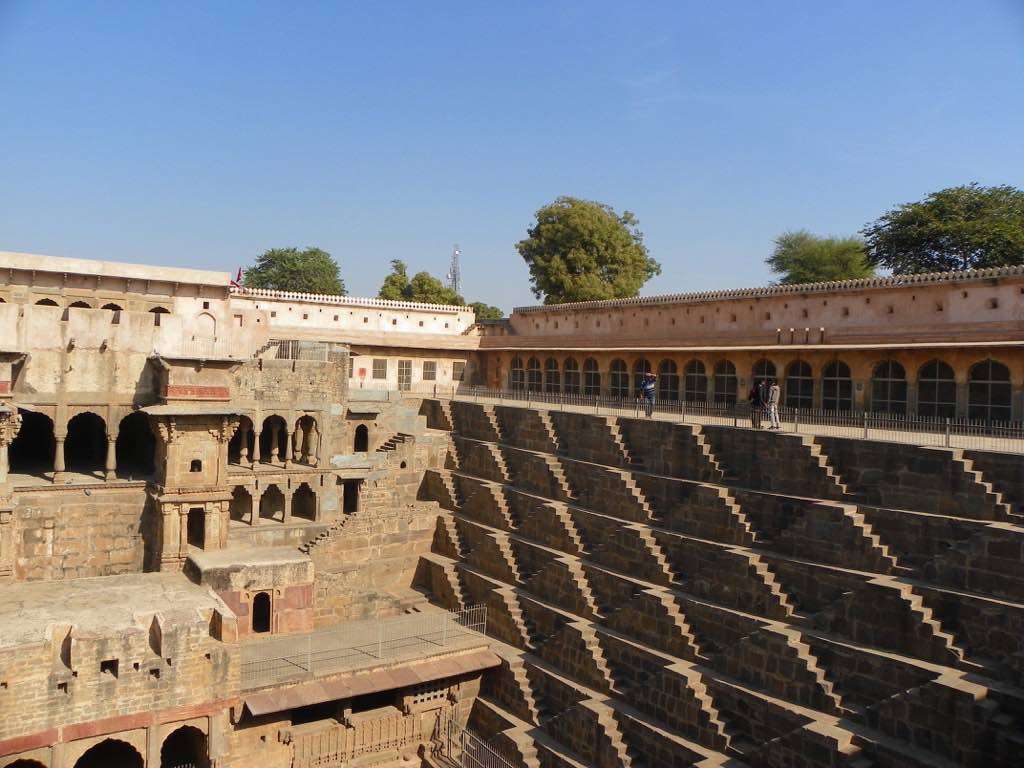
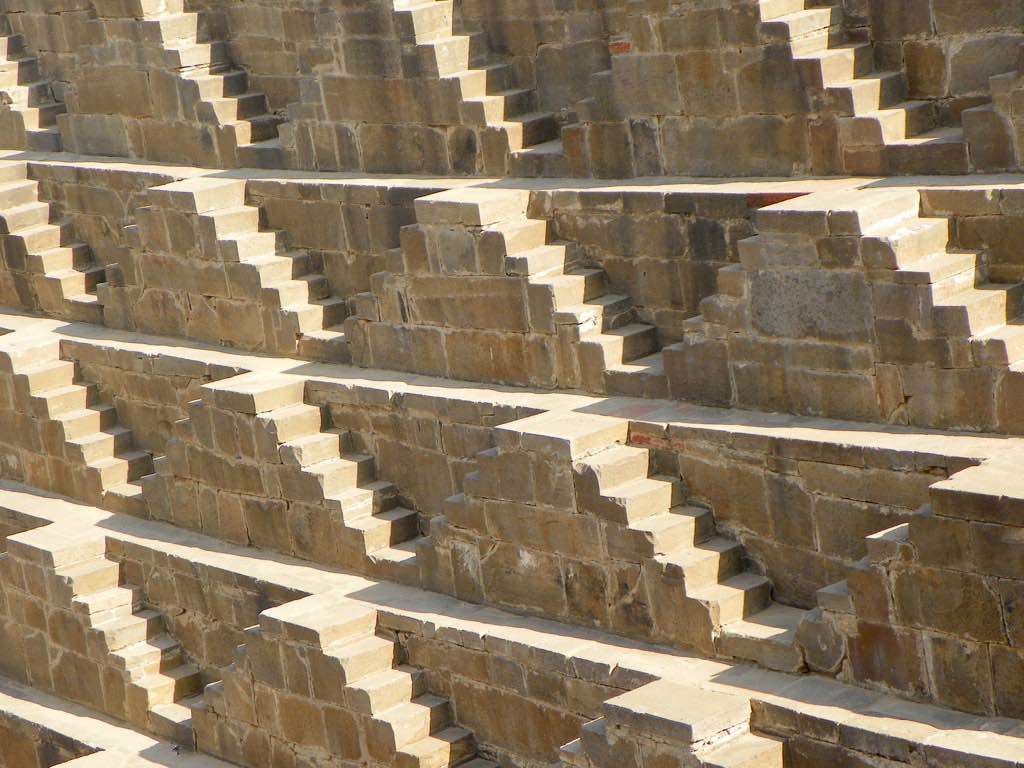
Not far from Bhangarh lies the famous Chand Baori stepwell at Abhaneri, a fascinating piece of medieval architecture. Descending nearly thirteen storeys into the earth, its dizzying grid of steps forms a geometric maze that feels almost hypnotic when seen from above.
The stepwell is believed to have been built between the 6th and 10th centuries by King Chand Raja of the Gurjara-Pratihara dynasty, who claimed descent from Lord Rama’s younger brother, Lakshman. At the height of their power, the Pratiharas ruled large parts of Rajasthan from their capital at Mandore near Jodhpur.
Even today, standing at the edge of Chand Baori, you can sense how architecture and climate once worked quietly together in this arid landscape.

Harshat Mata Temple: In ruins beside the stepwell
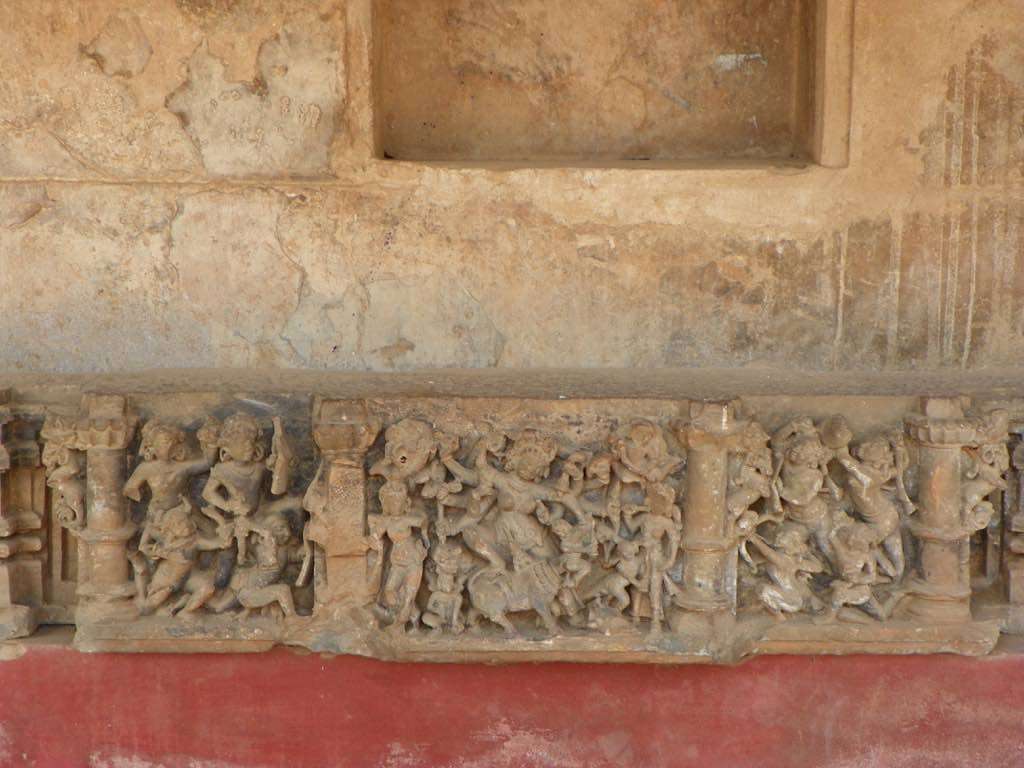
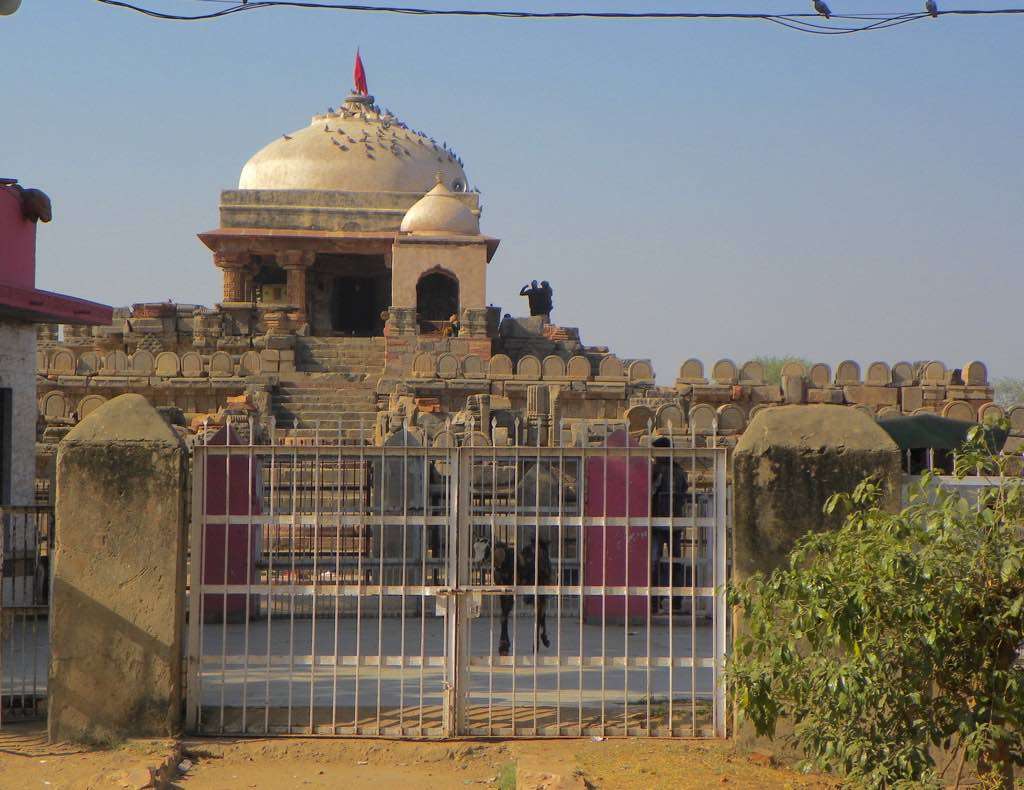
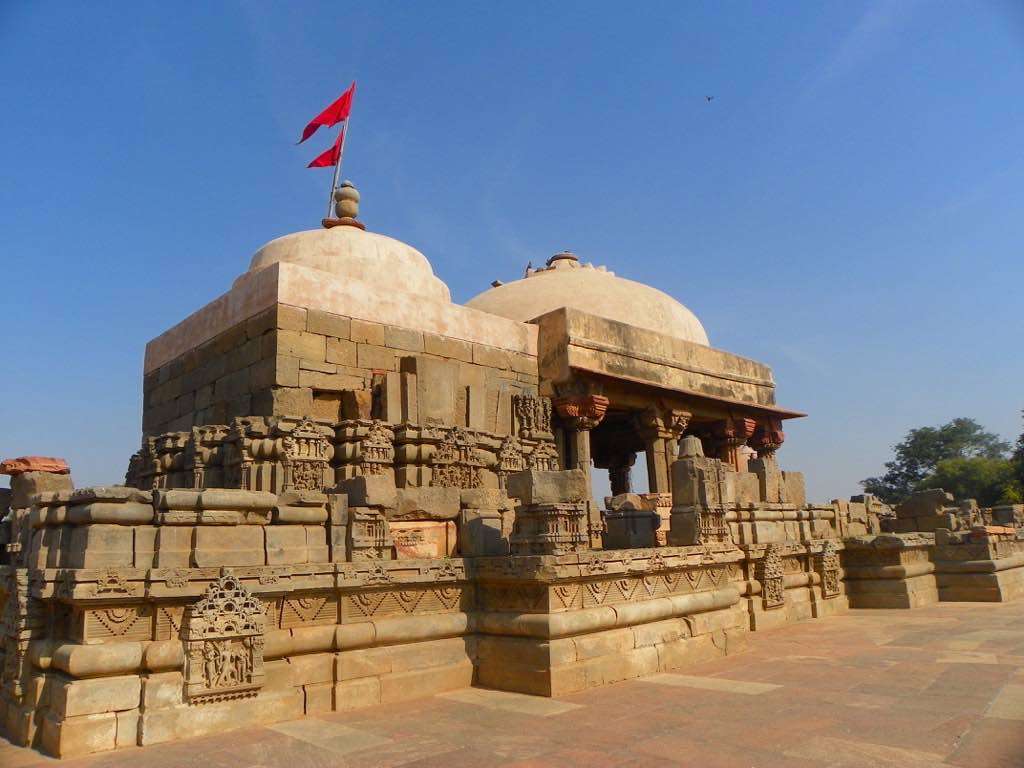
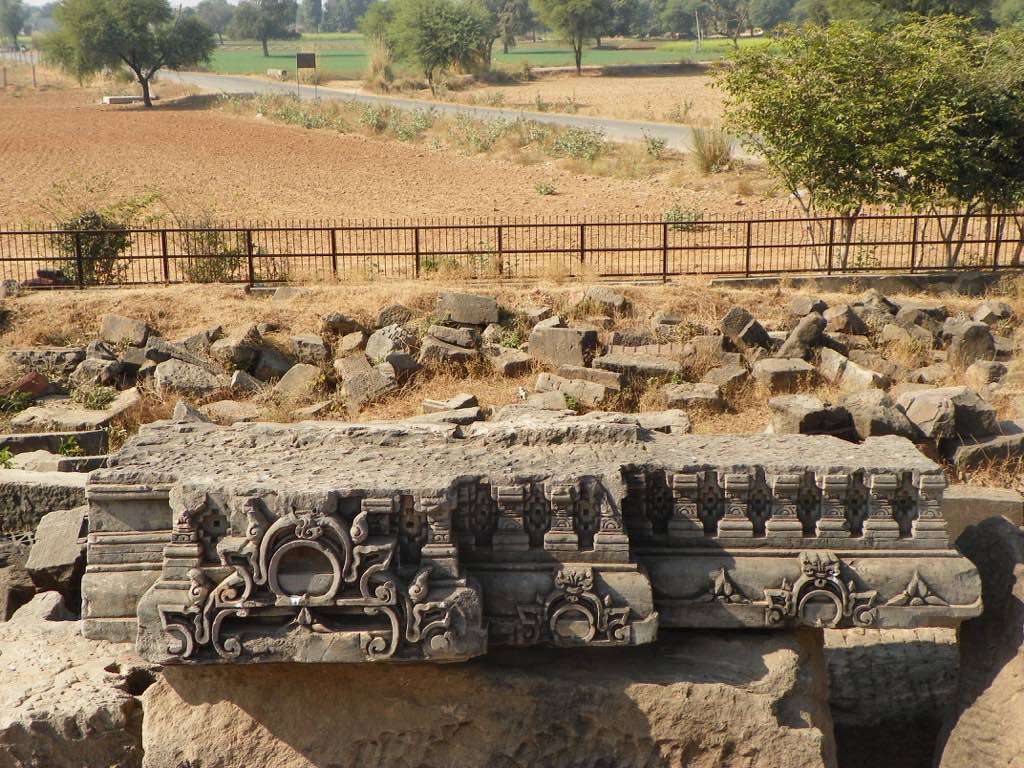
At a stone’s throwaway from Chandbaori and right beside the stepwell stands the Harshat Mata temple, once dedicated to the goddess of joy and happiness.
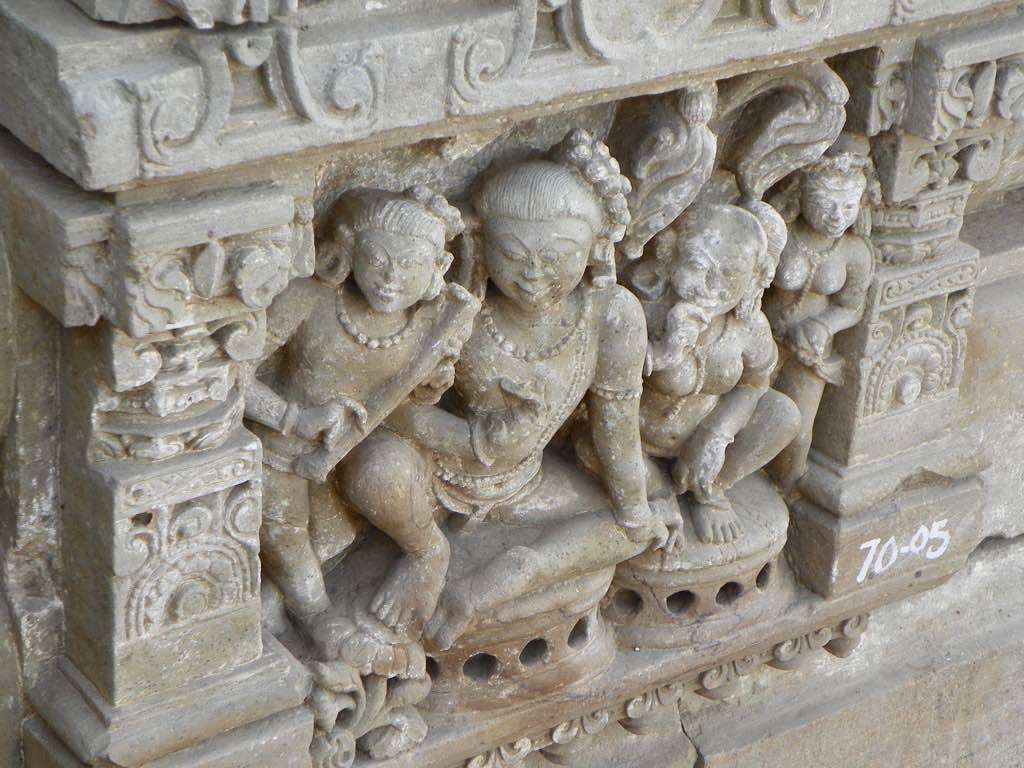
Though much of the original structure was destroyed by Mahmud Ghazni, with remnants scattered around in the courtyard as fragments, the surviving carvings still hint at the temple’s former grandeur.
Together, the temple and the step-well reveal how water, worship, and daily life were once woven seamlessly into the rhythm of this arid land.
Practical information for planning a trip to Sariska
A circuit covering Sariska’s Tehla gate, Bhangarh, and Chand Baori can be done in about three to four hours by car, though if you are starting from Jaipur, the journey to Abhaneri itself takes nearly three hours, making it a full-day excursion.
Here is a map depicting the circuit :
Which gate to choose for a safari in Sariska?
Like any other big wildlife sanctuary, there are more than one gate even at Sariska tiger reserve. They are Sariska gate and Tehla gate. And, the distance between the two is 80km.
Spread over an expansive 1200 sq.km, the tiger reserve has been divided into three zones. While, Tehla gate has one safari route, the Sariska gate has three.
How to book a safari at Sariska Wildlife Sanctuary
Search for “Sariska safari booking”, and you’re bound to be shown umpteen non-authentic sites by His Highness Google.
However, the only legitimate website to book safaris in any of the Rajasthan Wildlife sanctuaries is the Rajasthan Forest Department’s Official Website . Also, when in doubt with anything pertaining to tourism in Rajasthan, kindly check their official tourism website.
Before you click on the above link, do have a look at the screenshots below to understand how the official website looks and works:

Once the official homepage opens, click on Wildlife information on the Top menu bar to select ” Booking for Online Safari/Permit” as shown below:

Now, you are just a couple of steps closer to booking a safari in Sariska or in any other Rajasthan wildlife sanctuary, by clicking the Select Place dropdown menu. Then choose the date, slots and booking type, based on availability.
The tiger reserve offers two types of safari vehicles : a jeep ( for a group 6 and below), and a canter ( for larger groups upto 20 people). Choose according to your preference.
Voila! You have successfully booked a safari with just a few clicks:))

Alternatively, you could also check with the property at which you are staying for arrangement of safaris at Sariska Tiger Reserve.
In my case, Sariska Manor took complete care of arranging a safari from the Tehla gate!
Where to stay in Sariska Wildlife Sanctuary?
I personally prefer properties that are located near the gates of tiger reserves, as you need not waste time in commuting from the property of stay to the boarding point of the safari.
I remember from our earlier trip to Landsdowne in Uttarakhand, where we ended wasting close to 2 hours just to reach the Kalagarh Tiger Reserve entrance, and embark on our safari. Hence, always prior check the distance from the property to the safari gate. More on this a little further.
Hence, Sariska Manor, a property that served as my home away from home to explore the Sariska Wildlife Sanctuary is a great place to stay, and is highly recommended.
You could also opt to stay at the many resorts available in and around both the gates. Or even better, opt to stay at one of the Rajasthan Tourism Development Corporation run guest houses. They are affordable, simple and neat. I had stayed with them on my trip to Alwar earlier.
Where is Sariska Manor?
Sariska Manor is a luxury jungle lodge located in the Sariska National Park, Rajasthan. The sanctuary is spread across the rolling mountains of the Aravalli, stretching over approximately 1200 sq km, in the oldest regions of the country.
Sariska Manor near Tehla Gate
Yes! Sariska Manor abuts the fringes of the Sariska Tiger Reserve, while being located comfortably next to the Tehla Gate in the buffer zone — one of the two gates to embark on a safari into the tiger reserve [ the other being the Sariska gate].


Is that all? Well, no….actually.
Star-Gazing in the Aravallis
Located in one of the darkest regions on earth, the night-sky of Sariska glitters with constellations, planets and stars, which otherwise isn’t visible under a city night-scape. Hence, star-gazers and astro-lovers too are in for a treat on a clear night.
Best Season to Visit Sariska
This latest trip to the Sariska Tiger Reserve is my second one in recent years, and I’ve been completely bowled over by the region’s beauty especially during the monsoons.
The last time was when we embarked on a road-trip to Alwar from Delhi, and got to explore the other end of the Sariska National Park near Alwar.
However, it was during the winters.
Although, the sightings [ of spotting a tiger or a leopard] are much more easier during summers and winters in this region, I find the post-monsoon seasons the most invigorating in the jungles, especially in the expansive Aravalli region.
Because, the monsoons are that time of the year when a forest indeed looks like one —lush with brimming ponds and lakes, chirping birds, playful chitals, and jumping langurs.
How to reach Sariska Tiger Reserve
It is around 200 km from Delhi, 110 km from Jaipur and 35 km from Alwar. It is well-connected by road transport like buses and taxis. While the nearest airport is at Jaipur, the closest railway station is at Alwar, which is just an hour’s drive from the property.
Parting words before I embark on my next trip
Refreshing open spaces, verdant rolling mountains and the charming avian friends calmed my nerves, while the hospitality rendered by management and staff of Sariska Manor pampered me thoroughly.
I have shared my experience of staying at Sariska Manor succinctly, and have supplement this write-up with a focus on the must-visit places in the Sariska region.
In conclusion, with its bountiful paths and breathtaking vistas, forts entangled in history and mystery, and a vast area frequented by myriad avians and rare wildlife, Sariska turned out to be a hidden gem and a perfect non-Himalayan getaway for me during these turbulent times.
Meanwhile, do watch this reel on my experience at Sariska Manor, and I hope you found the post useful!
Should you still have any queries regarding the property or the experiences, feel free to ask them in the comments section, and I shall help you out as much as possible.


Loved reading this beautifully narrated blog — it has made us even more excited about our upcoming trip to Sariska! The details about the reserve, nearby attractions, and practical tips are really helpful. Your descriptions truly capture the calm, natural charm of the place. Thanks for sharing such an inspiring and informative read!
Thank you so much for your kind words. I am glad that the information shared here was of help :)) Good luck with the trip. Happy sightings!
Hi your blog is very informative and well written
Hi your blog is very informative and well written